
As we traveled further south into Missouri, the land changed. It was clear we were leaving the Great Plains behind us. There were more hardwood forests and more distinct hills. There are natural stone ledges and walls along the road – and many houses and older buildings clearly made of the stone found in this area. Unfortunately, the area does not possess the same level of historical prosperity that is evident in Iowa.
There are hundreds of small, individual churches – Church of Christ – Church of the Firstborn – Assemblies of God – and different Baptist sects galore. I noticed there were many 1st Baptists, and also a few 2nds. It is a very rural area, with tiny communities.
Rob and I also began to see armadillos on the road – they must be nocturnal. Somehow, I never associated armadillos with Missouri!
August 18 was the day we traveled further into Missouri to do some family research. Rob’s mother’s family had owned a farm from just after the Civil War in what is now the Buffalo area of Missouri – about 20 miles north of Springfield, near March. We had GPS coordinates to where the family farm had been and also to a churchyard where many of the family were buried. So, we set out on an adventure to find this tiny church – down country roads (thank goodness for the TriGlide!). We started following the Google directions, which told us to look for a county road which was not labeled as such. Apple maps actually got us much closer – speaking of tiny churches, we were looking for one that was called the Union Mound Baptist Church – it had a graveyard that had been in use from at least the 1830s. As we were deciphering the directions, a very friendly local man stopped to see if we needed help – and directed us to the tiny church. We headed down the bumpy country road and found the church and the graveyard, in which there was an entire Wingo section. The property on either side of the church had once belonged to Rob’s family. The weather was extremely muggy – we walked among the graves and finally found the ones we were seeking. Wiley is Rob’s great-great-grandfather. The original headstones had been replaced (they were there, but no longer legible).
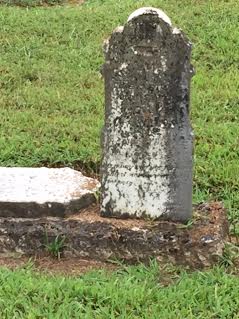
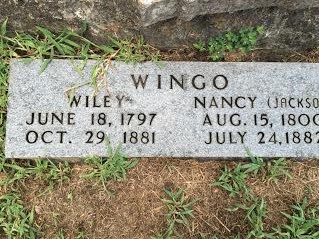 The little graveyard was quite peaceful and the headstones told many sad and sweet stories. I kept thinking of the song “Shenandoah” while walking among the graves.

 The property is still being farmed – all these years later. Signposts marked the intersection above the church. There was a clear stream – not muddy – running alongside the road, across from the church. There were wild turkeys in the field, and some original buildings, including this one.
 Finally, we headed back to the paved road and into Springfield – we were going to check out where Rob’s mom had gone to school and lived after they left the farm. We were also looking for the grave of the Union veteran and homesteader who founded the farm – he was buried at the national cemetery in Springfield. National cemeteries are very often in battlefields, by the way – this is something I have learned while on our travels. We did find his grave.
 We also found the schoolhouse and the location where the house in Springfield had stood – it has been taken down.
We then rode on to Branson. Neither of us was sure what to expect – but the Ozarks are quite beautiful, albeit not mountains of The Cascades or Rockies genre. They are covered with hardwood forests.
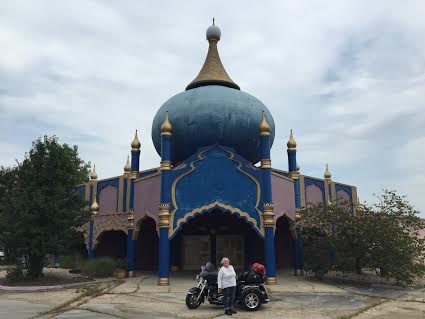
 Who knew that pesky iceberg was in Branson?
Branson is rather ticky tacky, in my view. Some have compared it to a Country/Western Las Vegas – that’s apt, sans the gambling.

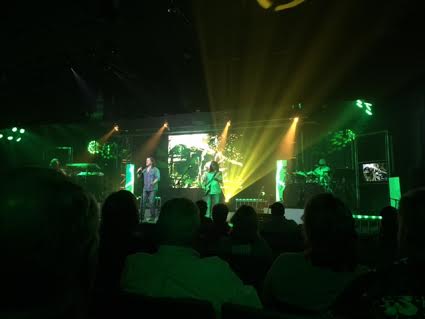 We did have a nice dinner and take in a “tribute” show to Creedence Clearwater Revival – and that was actually quite fun. The cover band did a great job. I’d forgotten how many “hits” the band had! We were pleasantly reminded.
All in all, quite a full day. We watched the thunderstorms come into our valley in Branson and watched the weather reports for Wednesday – rain, for the entire day, interspersed with thunderstorms. We decided we’d ride on, in our rain gear.

 Annieoakley53's Blog